Our headquarters town. Fast dispatch and the deepest local knowledge for lawns from Hermon Center to Hermon Pond and out to the airport business district.
Also serving nearby: Carmel, Levant, Glenburn, Bangor, Hampden
What we offer in Hermon, ME
Same-day estimate response in our home town
Locally formulated fertilizer for Hermon-area soil
Lawn care for Orono homeowners and Old Town residents — from College Avenue to Stillwater Avenue. Designed for the unique conditions along the Penobscot River.
Also serving nearby: Old Town, Veazie, Bangor, Bradley
Year-round lawn, tree, and shrub care for Waterville and Central Maine. Locally serviced from our Bangor base — same TruGreen guarantee, same friendly crew.
Also serving nearby: Oakland, Fairfield, Winslow, Sidney, Vassalboro
What we offer in Waterville, ME
Full-season fertilization & weed control
Core aeration and overseeding in fall
TruDefense℠ Mosquito Control through summer
Locally owned franchise — no out-of-state call center
Lawn care for Ellsworth and the gateway-to-Acadia region. Whether year-round homes or summer properties, our team delivers consistent, guaranteed results.
Also serving nearby: Trenton, Lamoine, Surry, Hancock, Bar Harbor
Lawn, tree, and shrub care for Blue Hill Peninsula properties. Programs respect the area's natural character while delivering thicker, greener results.
Also serving nearby: Brooksville, Castine, Penobscot, Surry, Sedgwick
What we offer in Blue Hill, ME
Programs tailored to Blue Hill soil and microclimates
Coastal lawn care for Camden homes and properties. Locally tuned programs that respect the village character while keeping turf and plantings at their best.
Also serving nearby: Rockport, Lincolnville, Hope, Rockland
Belfast-area lawn, tree, and pest care. From downtown waterfront homes to inland properties along Route 1 and Route 3, we keep Maine lawns thick and healthy.
Also serving nearby: Searsport, Stockton Springs, Northport, Searsmont, Lincolnville
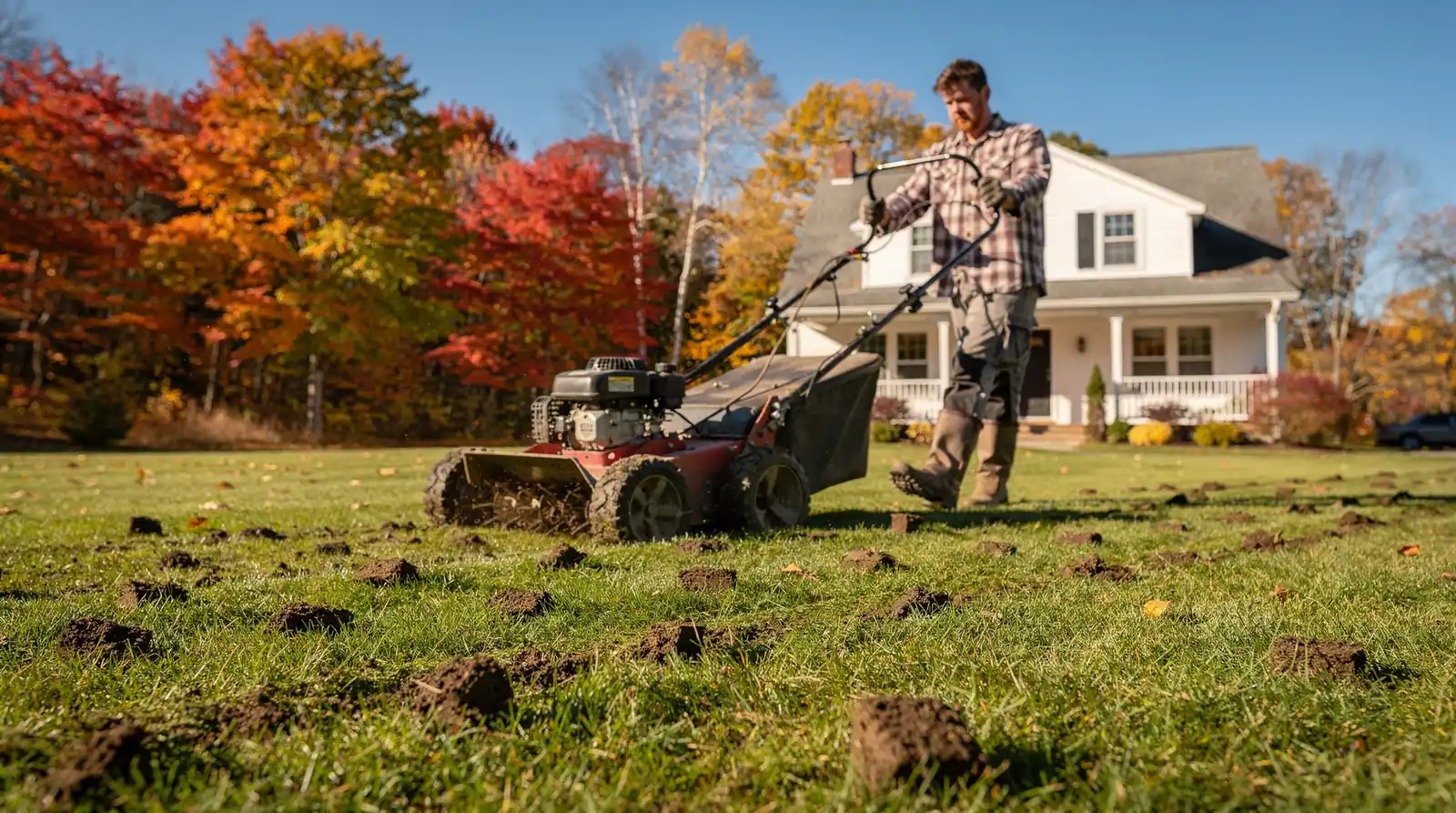
Core aeration removes small soil plugs up to four inches deep, relieving compaction caused by Maine’s mowing seasons, foot traffic, and heavy rains. This process restores air and water flow to grass roots, strengthening lawns before winter. TruGreen Bangor, serving Bangor, Waterville, and coastal Maine, pairs aeration with overseeding for deeper root growth and lasting results.
Why does your Maine lawn need core aeration?
Maine lawns require core aeration Maine because of seasonal compaction. Heavy clay soils choke grass roots before they can establish deep growth. Over the course of a single season, mowing, foot traffic, and rain pack the topsoil so tightly that water runs off the surface instead of soaking in. The University of Maine Cooperative Extension notes that this compaction limits air movement to the root system, leaving grass looking depleted and stressed.
Signs of Soil Compaction and Thatch Buildup
Homeowners should watch for several clear signs indicating soil compaction and excessive thatch, including:
Persistent puddling or runoff after rain or irrigation
Thin, patchy grass with reduced vigor
Increased weed growth and pest problems
Difficulty pushing a screwdriver or similar tool into the lawn soil
Thatch layers thicker than 1/2 inch causing spongy or uneven turf feel
Recognizing these symptoms early allows timely intervention with aeration, reducing the risk of long-term damage.
What happens when soil compaction goes untreated?
Compacted soil creates two interconnected problems. First, water and fertilizer sit on the surface, wasting treatments and encouraging shallow roots. Second, thatch — accumulated plant matter at the base of the grass — builds up beyond a healthy 1/2-inch thickness. Thatch layers thicker than that block water and air movement and create ideal habitat for insect pests like grubs.
How does core aeration fix these issues?
Core aeration removes small plugs of thatch and soil up to 4 inches in length from the lawn. This process delivers four measurable benefits:
Improved air exchange between the soil and atmosphere
Enhanced water intake and reduced runoff
Better fertilizer uptake and use
Deeper root growth that withstands Maine’s wet springs and dry summer stretches
Maine lawns face compaction pressures that lawns in sandier, drier regions simply do not. Wet springs delay mowing schedules, and the region’s naturally heavy clay soils resist drainage. Without aeration, these conditions compound year after year, turning a once-healthy lawn into a patchy, weed-prone surface that struggles to recover.
Optimal Seasonal Timing for Core Aeration in Maine
The timing of aeration is critical to maximize benefits in Maine’s unique climate. Late summer to early fall is widely considered the prime season for core aeration:
Late Summer to Early Fall: Aerating during this period takes advantage of active root growth as soil temperatures remain warm but air temperatures cool. This timing allows grass to recover quickly, develop stronger roots, and build resilience before winter. The soils are often drier and easier to work with than in spring.
Spring: Spring aeration can also be effective, especially when paired with soil testing and pH adjustments. Early spring aeration helps relieve compaction after winter freeze-thaw cycles and prepares the lawn for the summer growing season. However, scheduling must avoid overly wet conditions common in spring in Maine to prevent additional compaction.
Aerating twice per year—once in spring and once in fall—offers the best control of thatch and compaction across the growing season, but homeowners should consider their lawn’s specific needs and soil moisture conditions.
Can spring aeration work for Maine lawns?
Spring aeration works best when homeowners first test their soil and adjust pH levels. The University of Maine Cooperative Extension recommends de-thatching in spring as part of a complete lawn care plan. This timing allows the lawn to recover during the active growing period before summer heat arrives.
Should homeowners avoid aerating wet soil?
Wet soil creates problems during aeration. Foot traffic on saturated ground worsens compaction rather than relieving it. Homeowners should keep off wet grass entirely and wait until the soil is moist but not muddy before scheduling aeration. This simple precaution prevents the very compaction that aeration aims to fix.
Step-by-Step Preparation and Execution of Core Aeration
Successfully aerating your Maine lawn involves careful preparation and execution to ensure effective results:
Assess Lawn Condition: Identify compacted areas and measure thatch thickness. Check soil moisture to ensure it’s damp but not soggy.
Mow and Water: Mow the lawn slightly shorter than usual and water it thoroughly 24-48 hours before aeration to soften the soil.
Mark Obstacles: Remove debris and mark sprinkler heads, gardens, or other obstacles to avoid during aeration.
Choose Equipment: Select appropriate aeration equipment based on lawn size and soil type (see equipment comparisons below).
Aerate Thoroughly: Run the aerator over the entire lawn, focusing on compacted zones and ensuring sufficient holes per square foot (ideally 20-40 cores).
Leave the Cores: Distribute the removed plugs evenly; they will break down and improve soil texture.
Follow with Overseeding and Fertilization: Apply seed and fertilizer immediately after aeration to enhance grass regeneration.
Equipment Comparisons: Core/Plug Aerators vs Spike Aerators
Choosing the right aeration equipment is critical to effectively relieve soil compaction:
Type
Description
Benefits
Drawbacks
Core/Plug Aerators
Remove small plugs of soil and thatch, creating holes that allow air, water, and nutrients to penetrate the soil.
Most effective for relieving soil compaction and improving root growth. Helps thatch breakdown. Typically preferred by professionals.
Slower process; plugs left on lawn surface. Requires specialized equipment.
Spike Aerators
Pierce the soil with solid spikes without removing soil plugs.
Easier to use for small areas; less disruptive to lawn surface.
Can increase compaction around holes. Less effective on heavy clay soils and thick thatch layers.
For Maine’s heavy clay soils and significant compaction issues, core aerators are the recommended choice to achieve lasting lawn health improvements.
Pairing Core Aeration with Overseeding and Fertilization
Core aeration creates ideal conditions for overseeding and fertilization to succeed:
Overseeding: Aeration holes allow seeds to contact soil more directly, improving germination rates and seedling establishment. Fall is an ideal time for overseeding, with cooler temperatures and adequate moisture.
Fertilization: Nutrients penetrate more effectively into aerated soil, enhancing plant uptake and reducing runoff losses. Fertilization after aeration supports rapid root and shoot growth.
Combining these practices maximizes lawn density, resilience, and aesthetic appeal.
Post-Aeration Lawn Care Best Practices
After aeration, proper lawn care reinforces benefits and protects your investment:
Water Regularly: Keep the soil moist, especially if you overseed, to promote seed germination and root recovery.
Limit Traffic: Avoid heavy foot traffic on the lawn for 1-2 weeks post-aeration to let turf recover.
Mow Properly: Resume mowing once grass reaches recommended height but avoid removing more than one-third of blade length.
Apply Mulch or Compost: Lightly topdress with compost or mulch to support soil health if desired.
Monitor for Weeds and Pests: Aerated lawns may be more susceptible temporarily; intervene promptly if issues arise.
Common Mistakes to Avoid When Aerating Your Lawn
Timing Aeration on Wet Soil: Aeration on saturated soil can worsen compaction.
Ignoring Soil Testing: Without testing, pH or nutrient imbalances may limit aeration benefits.
Over-Aerating: Aerating too frequently can stress the grass and soil.
Failing to Follow Up: Neglecting overseeding and fertilization reduces improvement potential.
Using Spike Aerators on Clay Soils: Spike aerators may worsen compaction in dense soils.
Local Penobscot County and Maine Soil and Weather Considerations
Penobscot County and much of Maine feature soil profiles with heavy clay content, creating natural drainage challenges. Frequent rain and snowmelt can saturate lawns, delaying yard work and aeration timing. Seasonal freeze-thaw cycles contribute to soil compression and surface heaving.
Homeowners and lawn care professionals must consider these factors when planning aeration and related lawn care activities. Scheduling aeration during optimal weather windows reduces risk and maximizes soil oxygen exchange. Local expertise, like that offered by TruGreen Bangor, ensures programs are customized to address specific soil conditions and climate patterns.
How does core aeration improve your lawn’s health?
Core aeration Maine directly reverses the damage caused by compacted soil, a common problem across Maine properties. The process removes small plugs of thatch and soil, creating channels that restore essential air exchange between the soil and atmosphere. This single intervention triggers a cascade of measurable improvements for any lawn struggling with heavy foot traffic or dense clay soils.
What happens to water and nutrients after aeration?
Enhanced water intake becomes immediately noticeable after treatment. Instead of pooling on the surface or running off into driveways, rainfall and irrigation penetrate deeply into the root zone. This improved absorption reduces water runoff and puddling, problems that plague many Maine lawns after spring thaws or summer downpours. The same channels that admit water also improve fertilizer uptake. Use, meaning every treatment applied afterward delivers more value to the grass plants.
How does aeration strengthen the root system?
Stronger grass roots develop as oxygen reaches deeper soil layers, improving heat and drought stress tolerance during Maine’s summer dry spells
Enhanced thatch breakdown occurs naturally, reducing the pest habitat that attracts grubs and other damaging insects
Disease risk drops as the soil environment becomes less hospitable to fungal pathogens that thrive in compacted, waterlogged conditions
TruGreen Bangor’s local crews tailor every aeration program to Maine’s specific soil composition. Seasonal weather patterns, ensuring the treatment addresses the exact compaction issues present on each property.
Conclusion
In closing, core aeration stands as a cornerstone of lawn health in Maine’s challenging climate, and TruGreen Bangor brings local expertise and proven science to every project. Our family-owned team understands the specific soil conditions. Seasonal demands across central and eastern Maine, from Bangor to Bar Harbor. With a commitment to guaranteed results and environmentally responsible practices, we help your lawn thrive year after year. When you’re ready to invest in a healthier landscape, TruGreen Bangor delivers the tailored solutions your property deserves.
Free estimate · Great service · Fair price
Take advantage of our seasonal offer: Save 15% on your Fall Lawn Prep!
If you're not pleased with one of our services, neither are we. Contact us to learn more about our service guarantee.
Family Owned and Operated
Liana Windle and family have worked in lawn care since 1996. They have been a TruGreen franchise owner since 2017.
Scientific Approach
To make sure that your lawn is receiving the proper nutrients, our approach to fertilization and other lawn care products is based on extensive scientific research.
No Contracts Required
We're certain that you'll love your lawn care — so much so that we don't require you to sign a contract.
America's #1 Lawn Care Company. Personalized lawn care drawn from years of research and experience.